
The meeting covered SDS drill bits in 18 mm, 22 mm, and 25 mm diameters. Representatives from both sides exchanged technical information, reviewed field test results, and discussed factors affecting drilling performance and product consistency.
Reviewing SDS Drill Bit Performance and Drilling Life
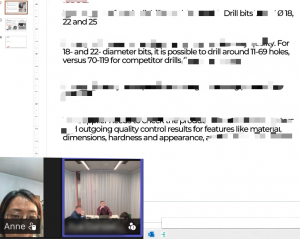
For the 18 mm and 22 mm drill bits, the customer reported a drilling life of 11 to 69 holes, compared with approximately 70 to 119 holes achieved by similar products evaluated under the customer’s testing program.
These findings formed an important part of the discussion, particularly regarding carbide tip wear, material selection, heat treatment, and manufacturing processes.
Drilling performance is influenced by several factors, including:
The EUROCUT team reviewed the customer’s feedback and discussed relevant production parameters and quality inspection criteria, including material specifications, dimensional accuracy, hardness, and surface appearance.
Demonstrating SDS Drill Bit Shank Hardness Testing Methods
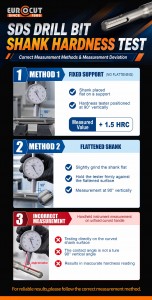
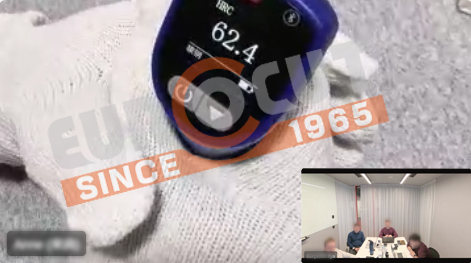
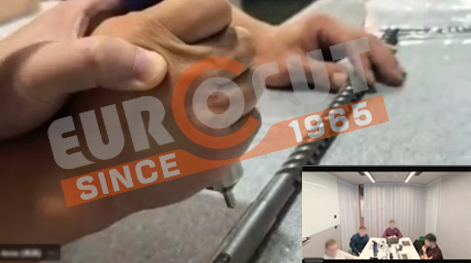
The EUROCUT team also explained how surface conditions, contact angles, and workpiece stability can influence hardness measurements. This demonstration provided a practical reference for evaluating SDS drill bit shank hardness and ensuring consistency in subsequent quality inspections.
Discussing Carbide Tip Quality and Manufacturing Processes
In addition to shank hardness, the meeting addressed carbide tip performance and its impact on drilling life. Carbide material properties, cutting-edge geometry, brazing quality, and heat treatment are among the key factors influencing SDS drill bit durability.
Both teams discussed these technical aspects, with particular attention to the role of production process control in maintaining consistent product quality.
The discussion also covered the importance of reviewing material specifications, dimensional accuracy, hardness, and final inspection results when evaluating drilling performance.
Strengthening Product Quality Through Technical Exchange
The online meeting provided an opportunity for EUROCUT and the customer to exchange field observations, review product specifications, and discuss practical testing procedures.
Customer feedback plays an important role in EUROCUT’s ongoing quality management efforts. Through direct technical communication, we gain a better understanding of how our products perform in different applications and identify areas for further evaluation and improvement.
EUROCUT remains committed to maintaining consistent manufacturing standards and providing reliable technical support for SDS drill bits and other drilling tools.
Post time: Oct-13-2026